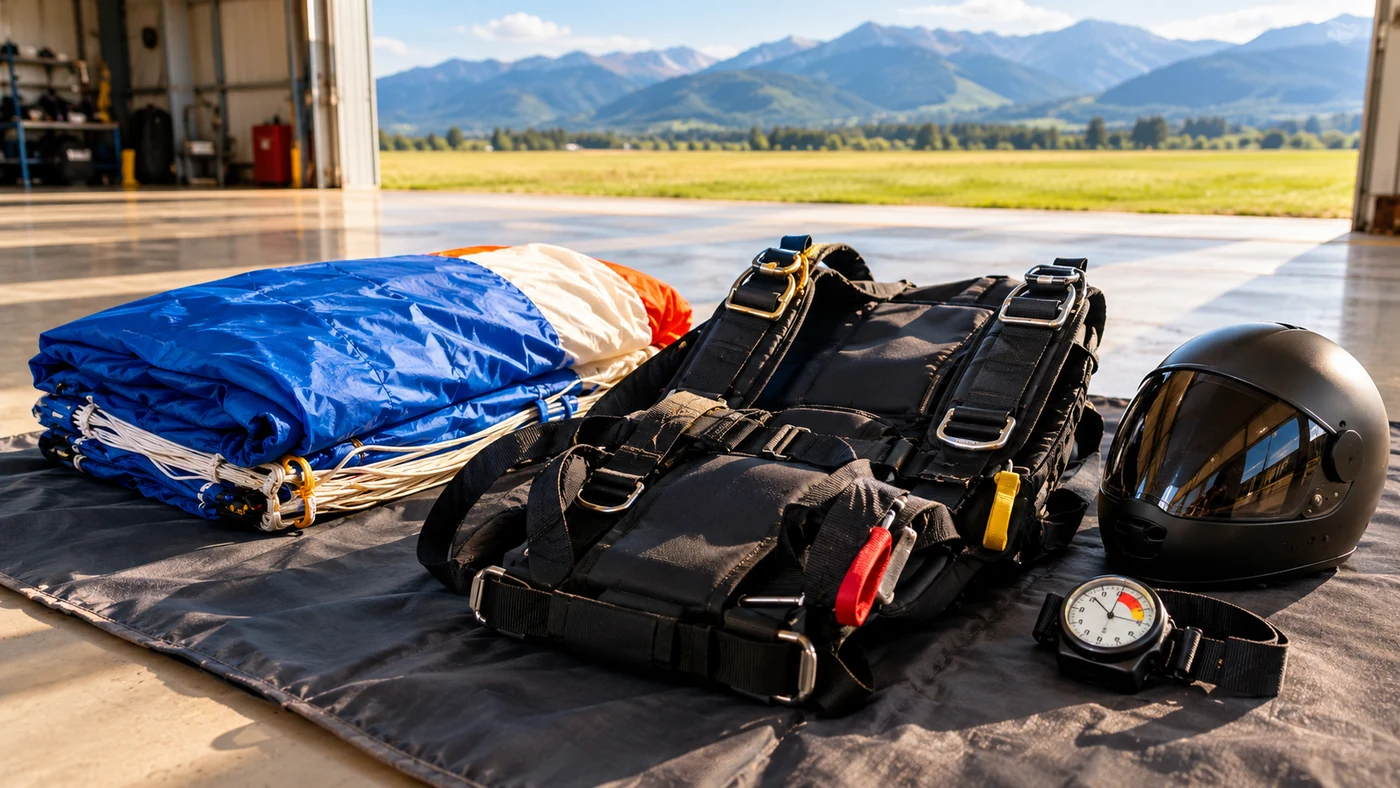
Booking choice: The airplane jump, from $513 per person. Check dates Compare the options below
There is no single honest answer, because the statistics that exist are not all measured the same way and some of the ones people quote do not exist at all.
What follows is every figure we could trace to an official source, what each one covers, and which popular claims we could not verify.
The quick answer
Switzerland recorded 67,000 jumps and zero parachuting fatalities in 2022, with eighteen injuries. Worldwide in 2021 the FAI logged 1,038,138 tandem descents and five tandem fatalities, two of them passengers, which is roughly one passenger death per 519,000 descents. A Swiss tandem master needs 750 jumps and ten hours of freefall before carrying anyone, and revalidates every year. No Swiss authority publishes a tandem-specific fatality rate.
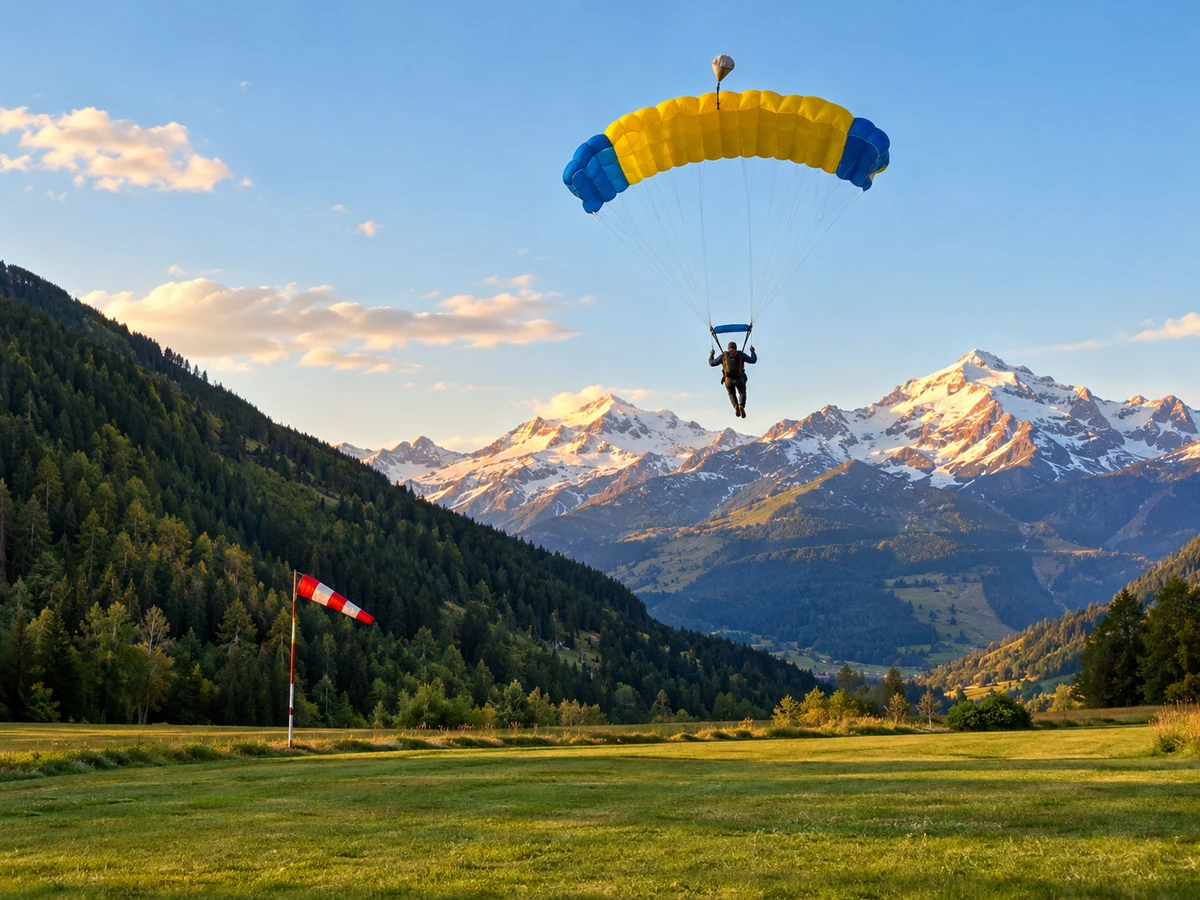
What are the Swiss figures?
Zero parachuting fatalities in 67,000 jumps in 2022, with eighteen injuries and seventy-two reserve deployments.
Those come from Swiss Skydive, the national association, reporting its annual return. A reserve deployment roughly once in every 930 jumps sounds alarming until you understand it is the system working: every rig carries a reserve, and using it is a normal, trained outcome rather than a disaster.
What is the tandem fatality rate?
About one passenger death per 519,000 tandem descents worldwide, derived from the FAI's 2021 figures.
The FAI International Skydiving Commission collected returns from 45 countries for 2021: 1,038,138 tandem descents and five tandem fatalities, of which two were passengers and three were instructors. Counting all five gives roughly one per 207,600 descents; counting passengers only gives one per 519,000.
| Figure | Value | Year | Source |
|---|---|---|---|
| Swiss jumps | 67,000 | 2022 | Swiss Skydive |
| Swiss parachuting fatalities | 0 | 2022 | Swiss Skydive |
| World tandem descents | 1,038,138 | 2021 | FAI ISC |
| World tandem fatalities | 5, of whom 2 passengers | 2021 | FAI ISC |
| US rate, all disciplines | 0.46 per 100,000 jumps | 2025 | USPA |
| US rate, record low year | 0.23 per 100,000 jumps | 2024 | USPA |
Who is allowed to take you up?
Somebody with at least 750 jumps and ten hours of cumulative freefall, revalidated every single year.
The Swiss Skydive tandem directive is specific. Before a tandem rating: 750 jumps with at least 80 in the preceding year, ten hours of freefall, at least one cutaway, at least one jump as a tandem passenger, and a licence held for two years. The examination includes a tandem jump with the examiner riding as the passenger. To keep the rating: eighty jumps a year including twenty tandems, or sit the examination again.
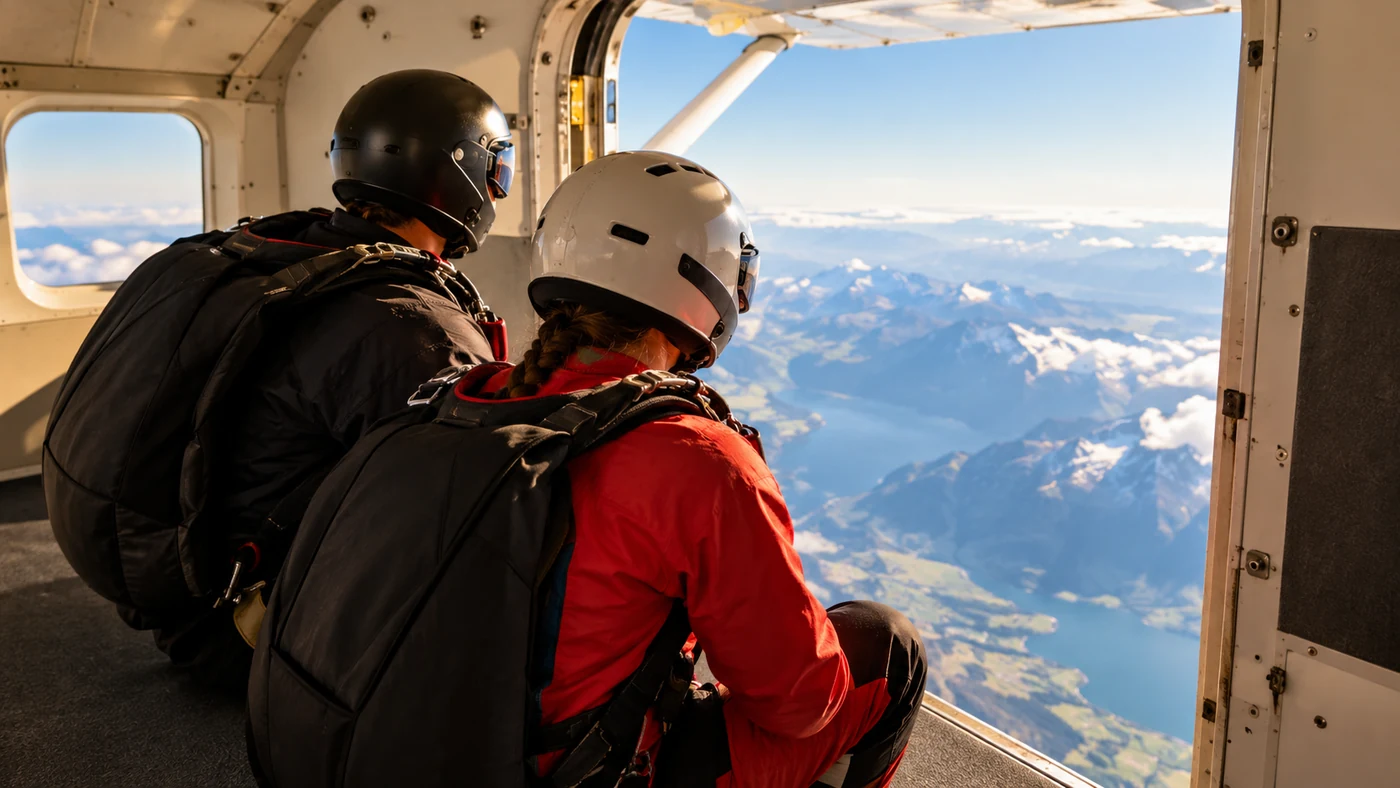
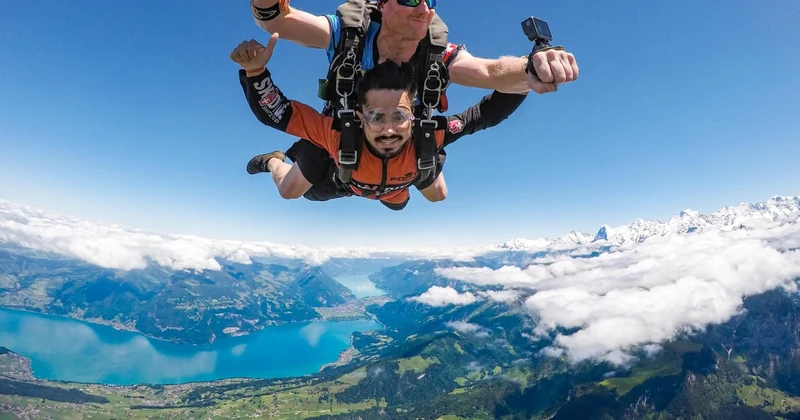
The jump that qualification sits behind, from 4,000 m over the Kander valley.
Check dates for the airplane jumpIs skydiving safer than driving?
Nobody can tell you honestly, because the figures are not measured the same way.
Skydiving rates are counted per jump. Paragliding rates are usually per participant per year. Road deaths are absolute annual totals. There is no official source that publishes them on a shared denominator, so any sentence of the form skydiving is X times safer than driving is an invention. We would rather say that than make one up.
What about paragliding, since more people do it?
Six deaths in Switzerland in 2024, from the national association's own accident analysis.
The Swiss hang gliding and paragliding federation published six fatal accidents and ninety-three reported incidents for 2024. For this region specifically, a 2022 study in Wilderness and Environmental Medicine counted 39 foot-launched flying-sport deaths in canton Berne between 2000 and 2018, of which four were in two tandem paragliding accidents. The authors note that rates cannot be calculated, because nobody knows how many pilots fly.
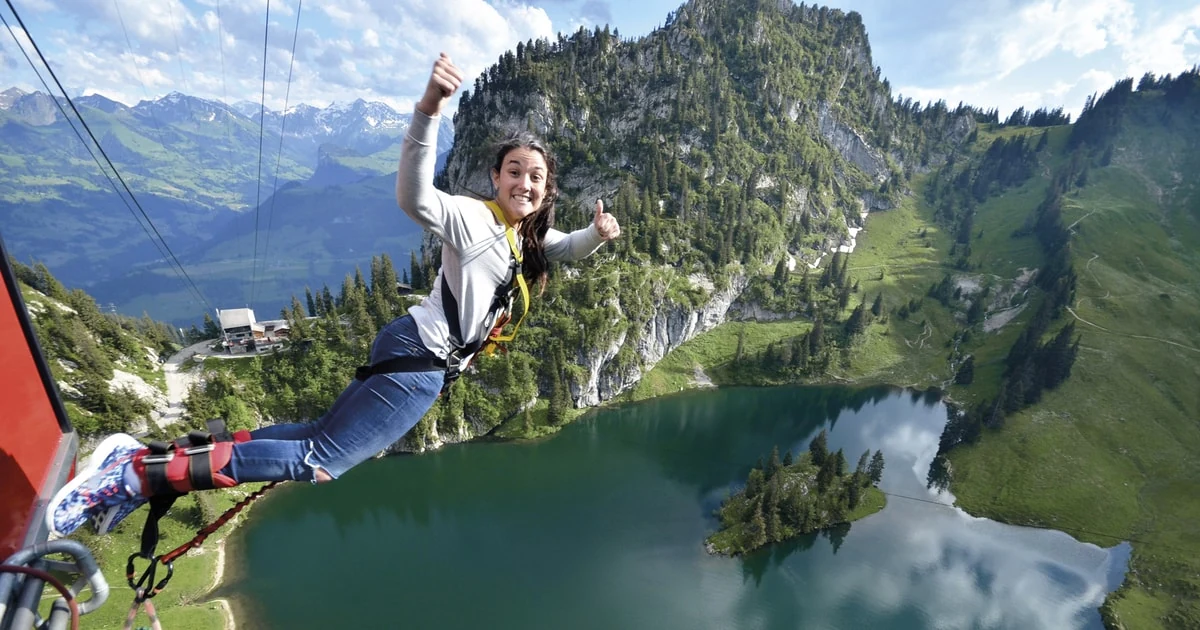
Who should not jump?
Anyone outside the published limits, and anyone who has not told the operator about a medical condition.
Minimum age twelve, with a parent present up to fifteen and written parental consent at sixteen and seventeen. The platform listing sets 40 kg to 105 kg and a minimum height of 1.40 m. The helicopter operator publishes tighter limits of its own, which are lower for women than the platform figure, so check the limits of the jump you are actually booking. The Zurich listing also excludes pregnancy, heart conditions and a fear of heights.
Frequently asked questions
What happens if the main parachute fails?
Every rig carries a reserve and the tandem master is trained to cut away the main and deploy it. Swiss figures show seventy-two reserve deployments in 67,000 jumps in 2022, with no fatalities that year.
Has anyone died skydiving in Interlaken?
We found no fatal commercial tandem skydiving accident in the Interlaken area in any official source. We also found no published Swiss tandem fatality rate, so absence of a record is not the same as a rate of zero.
Can I jump if I am afraid of heights?
Many people do, and one reviewer of the paragliding listing says exactly that. The Zurich skydiving listing, however, lists a fear of heights as an exclusion, so read the listing you are booking.
Ready to book
Pick the jump, or the thing that is not a jump
Free cancellation up to 24 hours before on every option. Prices are from-prices in USD and move with the season.
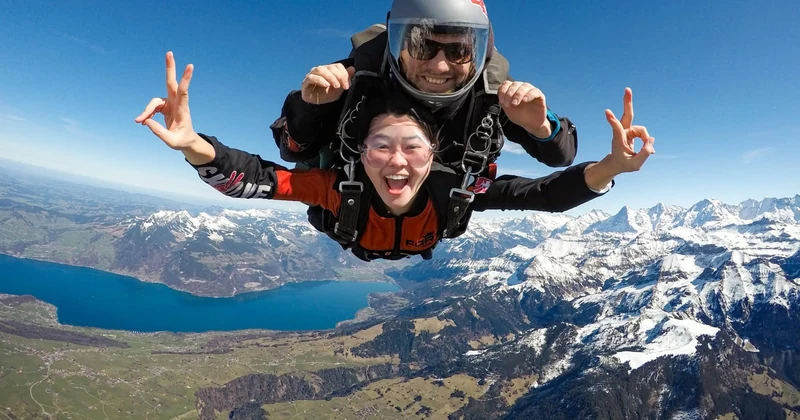
Airplane Skydive over the Swiss Alps
- Safety briefing, all equipment and one tandem master per jumper
- Shuttle from Interlaken to the airfield at Reichenbach
- About 15 minutes of scenic climb to 4,000 m, then a 45-second freefall
From Zurich: Skydive and Scenic Flight
- Return coach from Zurich with a driver guide
- 15-minute scenic flight and the skydive from 4,000 m
- All skydiving equipment and a professional tandem master
Interlaken: Tandem Paragliding Flight
- Tandem pilot and all flight equipment
- Transfer from Interlaken up to the launch site
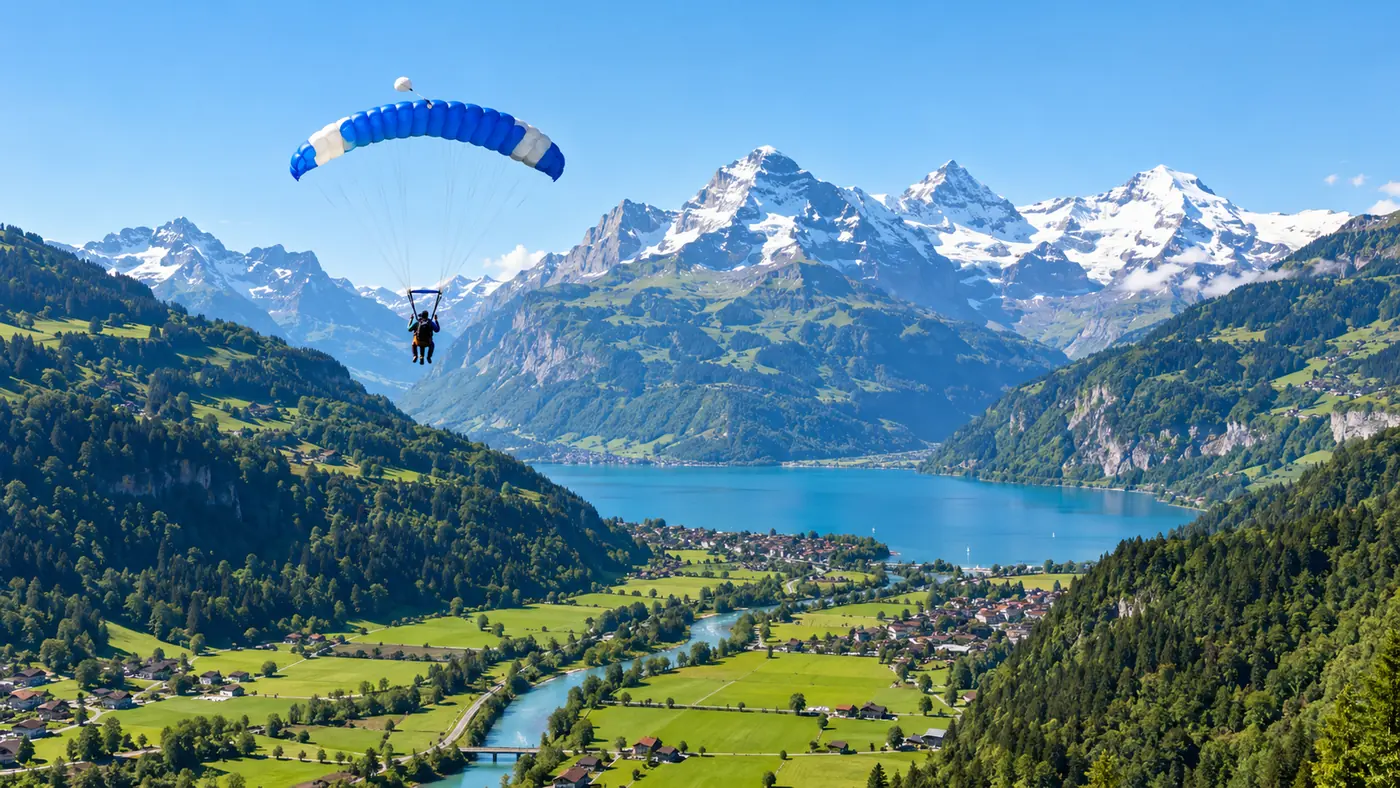
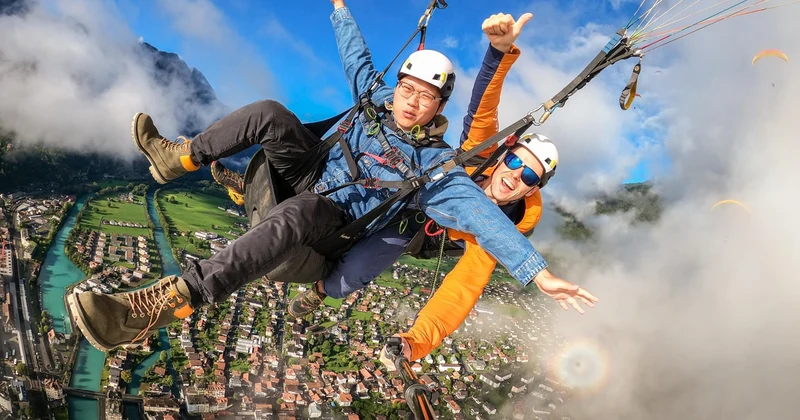
- About 20 minutes airborne over Lake Thun and the valley